Work · Case 01 of 03
Solo designer builds a ticketing platform that moves IDR 14.5 billion
As the solo designer, I took TribunBooking from zero to a B2B2C ticketing platform: a frictionless checkout for buyers and a management dashboard for event creators.
- Byline
- Gilang Segara
- Role
- Solo Product Designer
- Launched
- 2022
- Scope
- Buyer web + creator CMS
- Total GMV
- 14.5B+ IDR
Chapter I
The problem
You know Tribun, right? As one of Indonesia’s largest online news portals, it reflects the country’s diversity. With offices (Tribun daerah) in every region, it brings a strong local dimension to its coverage.
That local presence is about community, too. Tribun daerah hosts events almost every week and month. Over time they opened up to external audiences and drew hundreds, even thousands, of participants.
The tools didn’t scale. Registration ran on Google Forms and data lived in Google Sheets, which quickly caused serious operational problems. Can you imagine the chaos? Pure manual work, a total nightmare.
Chapter II
Research
I started with the people closest to the problem: the internal teams who created events, and users who had registered through Google Forms. I ran in-depth interviews to dig into their motivations, needs, and pain points, then mapped everything into an affinity diagram.

Their expected flow was refreshingly simple: find the event, book, pay easily, and get the ticket.
What the event creators were dealing with
Event creators told the same story from four different angles. Every pain point below became a requirement for the creator dashboard.

- Manual data entry. Copy-pasting hundreds of entries from Google Forms to Google Sheets.
- Chaotic reporting. Financial reports were disorganized and compiled by hand.
- No quota control. They couldn't track registrations or remaining quotas in real time.
- Manual distribution. Tickets were sent one by one via email and WhatsApp. It was completely unscalable.
Chapter III
Strategy
Q. How did you turn the research into a design strategy?
I gathered intentions from every stakeholder to make sure the product vision lined up with the larger company vision.

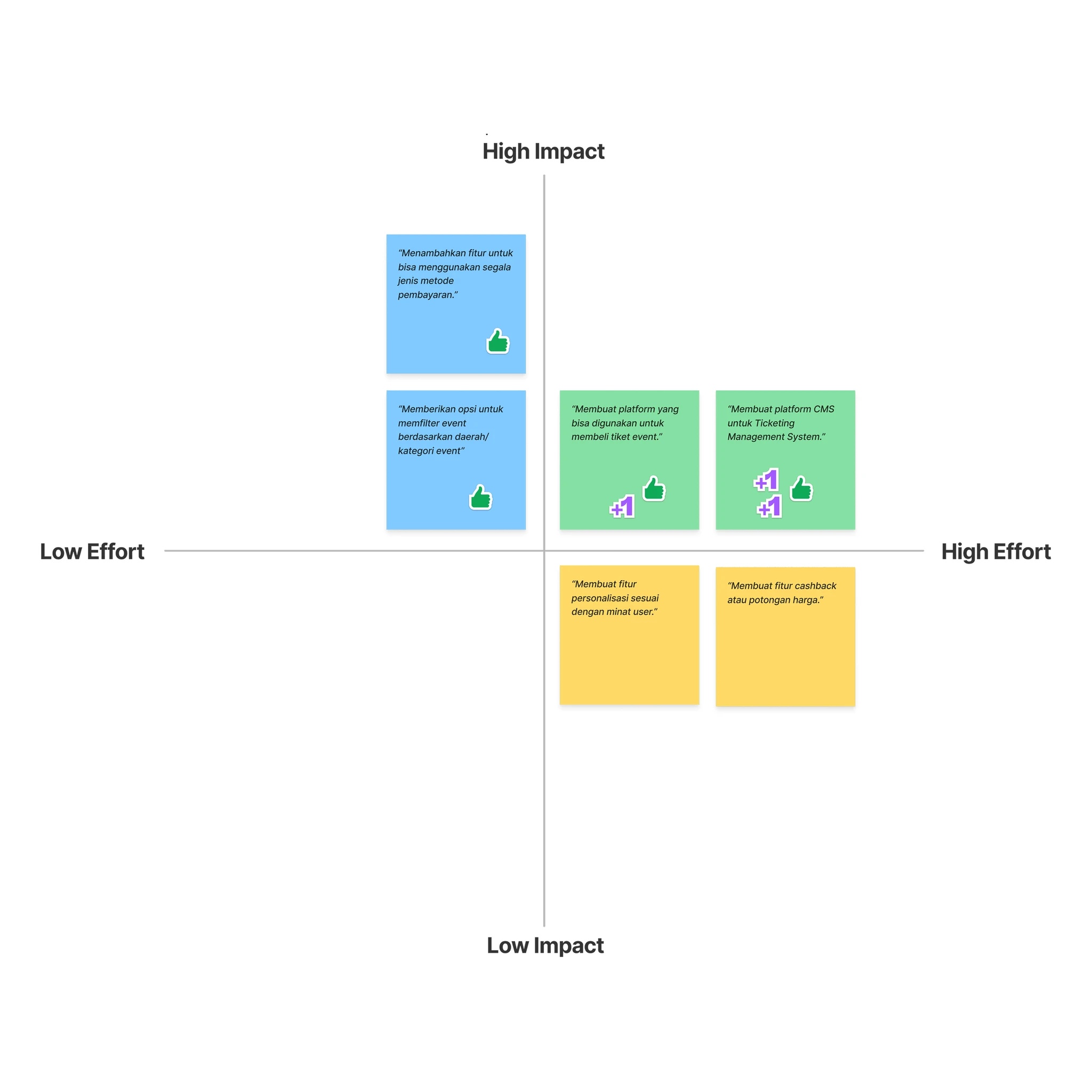
The challenge: a tight timeline, so we couldn’t build everything at once. With my PM, I mapped every potential solution on an Impact–Effort matrix.
Chapter IV
Blueprint
Q. So after the strategy, what did the final blueprint look like?
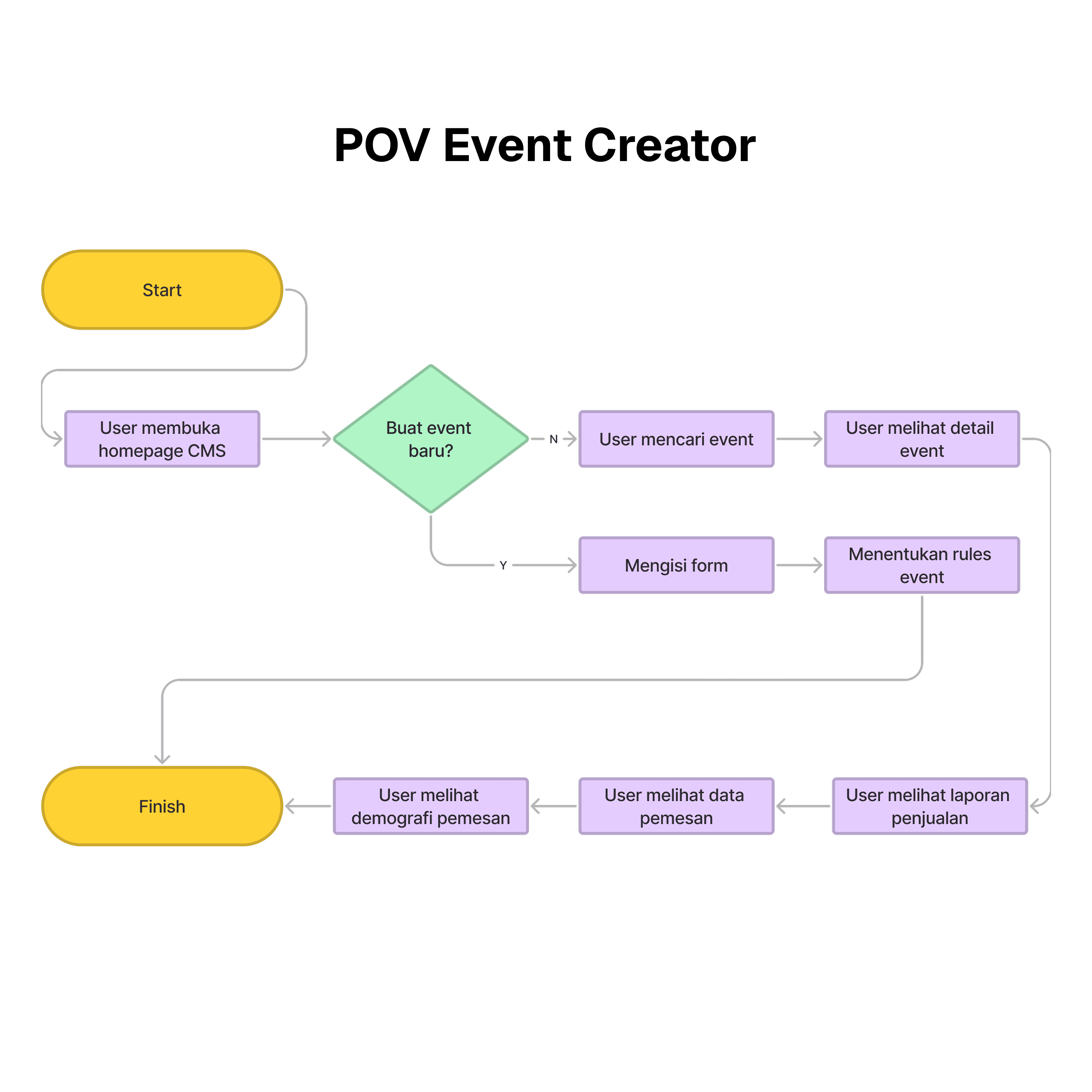
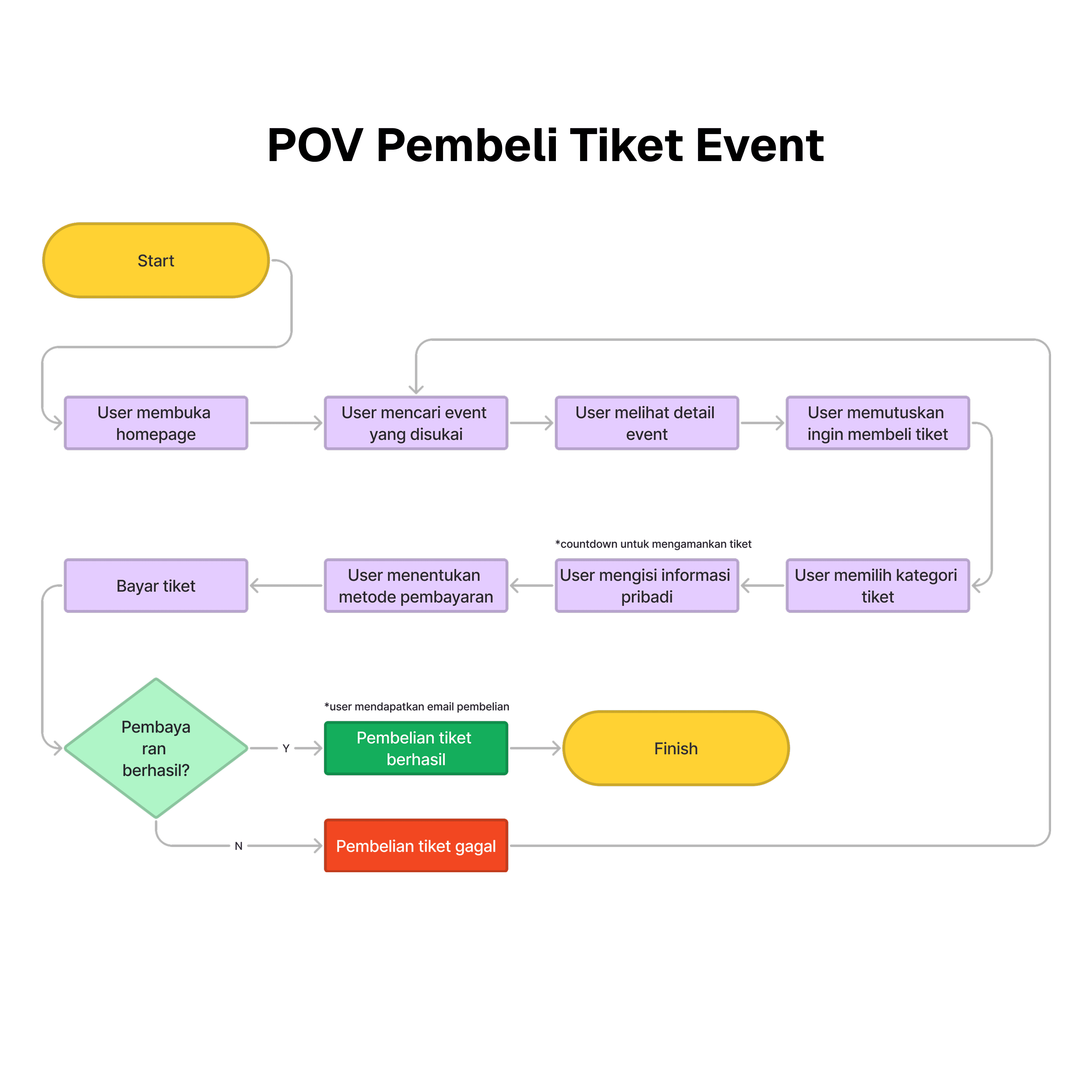
With priorities locked, I mapped the whole interaction as detailed user flows. Two distinct ones: for the ticket buyer, a simple and seamless booking and payment experience; for the event creator, a powerful management dashboard that removes the manual pain.
Chapter V
The design
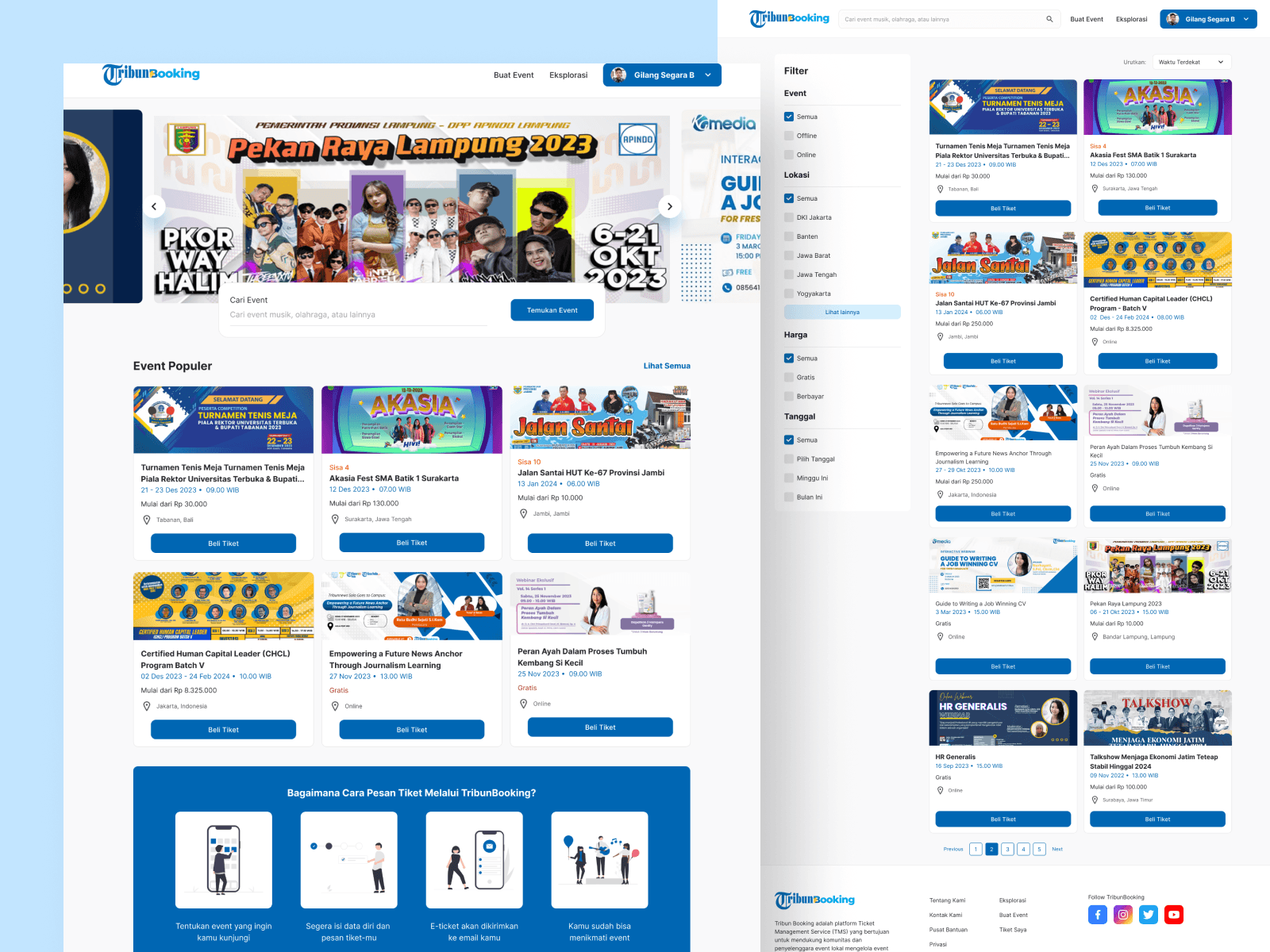
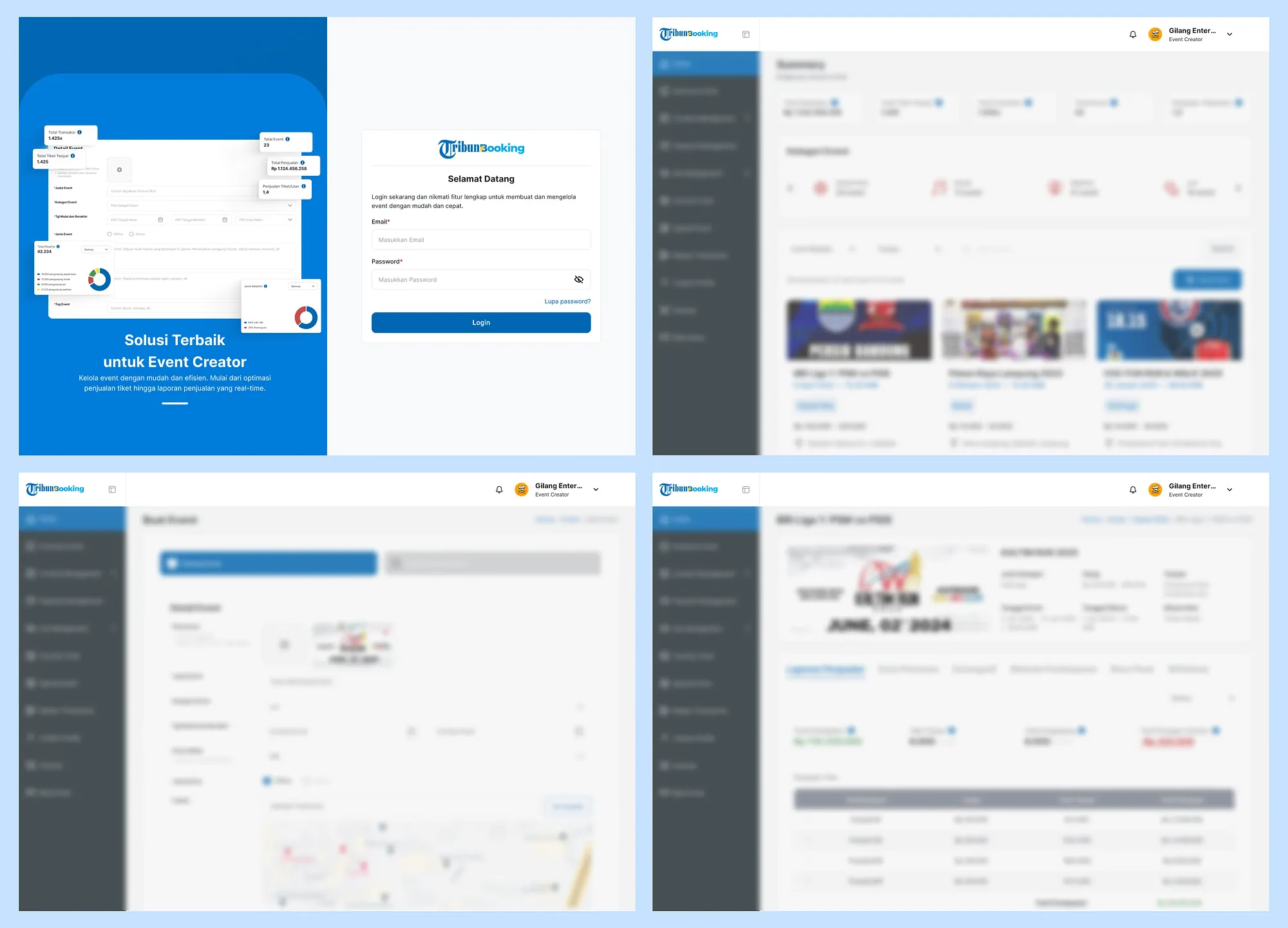
Then I moved into hi-fi. This is the result of the whole process and a highlight of the platform. Visit booking.tribunnews.com ↗
Chapter VI
Impact
Q. Stakeholders asked: what was the actual business impact?
Within the first 12 months after launch, TribunBooking performed like this:
Transactions
IDR GMV
First year
Conversion rate
Transaction success rate
Registered users who bought tickets
The long-term impact
Crossing 1 billion IDR in GMV in the first year, with one large event carrying a big share of it, showed the platform could take a real spike. Whether it could keep going was the harder test. Since its 2022 launch, TribunBooking has grown into a robust ticketing ecosystem. As of July 2026:
Transactions
Events hosted
IDR total GMV
As the solo designer who architected this from 0 to 1, it proves one thing: the success of a product design isn’t measured on launch day, but by its ability to sustain compounding growth, frictionlessly, for years to come.