Work · Case 02 of 03
Barred from streaming, a news app turns football readers into players
With streaming rights and official naming off the table, I built Selebrasi Lokal 2026: an original second-screen hub that turned passive readers into active players.
- Byline
- Gilang Segara
- Role
- Lead Product Designer
- Year
- 2026
- Scope
- Strategy, IA, UX/UI, testing
- Impact
- 75.6K active users in week one
Chapter I
Starting point
Superskor, the mobile sports homepage on TribunX, was about to see massive reading traffic ahead of the biggest global football tournament of 2026. What we didn't have was an interactive hub to turn that attention into active engagement.
As a product designer, I saw that a tournament like this isn't just a sports event. It's a battle for attention.
I worked with a UX researcher and another product designer. My role was lead and product architect: I owned the funnel strategy, the naming convention, the information architecture of the landing page, the user flows, and the full UI/UX of the quiz. I delegated research exploration to our researcher, and my fellow designer shaped the original gamification idea.
The vision was never another static scoreboard. It was a habit-forming micro-economy: take passive traffic and move it into one interactive hub, where people join in, test their football knowledge, and spend points in a single seamless ecosystem.
The goals: raise average session duration across segments, drive organic click-through from news articles, and open a new revenue stream through premium ad space and voucher redemption.
Chapter II
The problem
Every great vision hits a wall. At kick-off, a reality check on regulation took away the usual competitive edge of a sports product.
The IP and streaming embargo
Broadcast rights were strict. We couldn't use the tournament's official name and we couldn't offer live streaming. Live scores were allowed, but live scores are a commodity. Without streaming, people open the app for a few seconds to check the score, then close it to watch the match on TV.
The FOMO paradox
Our researcher's findings showed a user base dominated by Gen Z, and the biggest traffic spike came from casual, FOMO-driven watchers. A UI heavy on stats would alienate exactly the audience we were about to gain.
Reading fatigue
Readers consumed articles passively, with no strong retention loop pulling them back.
Chapter III
Strategic pivot
To solve this, I had to stop thinking like a score provider and start thinking like a destination.
The first decision was branding. I proposed a new name that was catchy and legal: Selebrasi Lokal 2026. It gave the product an identity of its own without touching anyone's IP.
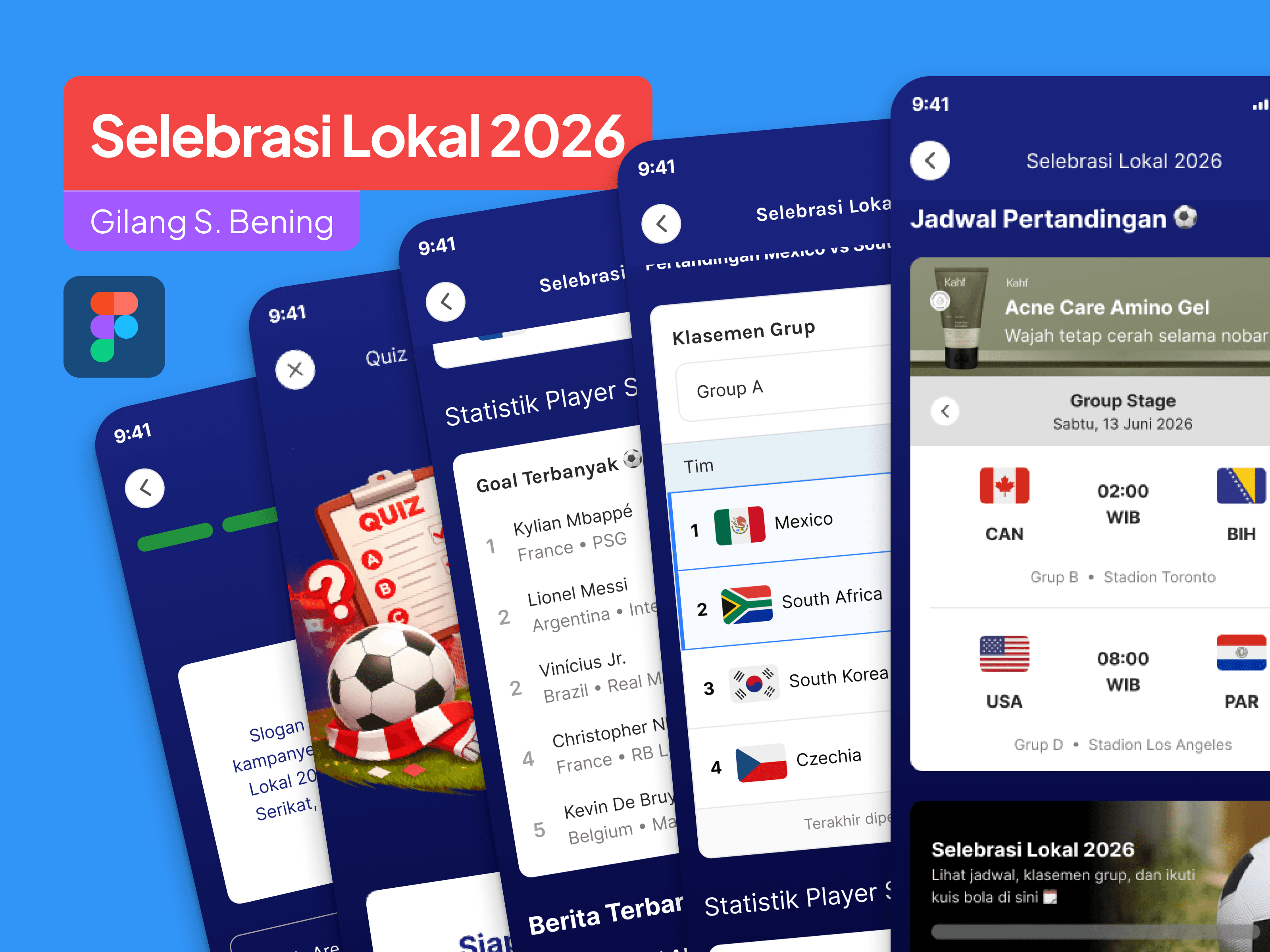
People would be watching the match on TV, so TribunX had to become the second screen. I placed a gamified knowledge quiz in the golden area of the landing page, giving people a dopamine-inducing activity while they follow the live score. Football trivia also works as an attention equalizer: flexible enough for hardcore fans, still enjoyable for casual viewers.
Architecturally, I separated the hub from the Superskor reading experience with a pop-up store model: a standalone landing page that protects the news-reading mental model.
Chapter IV
Execution
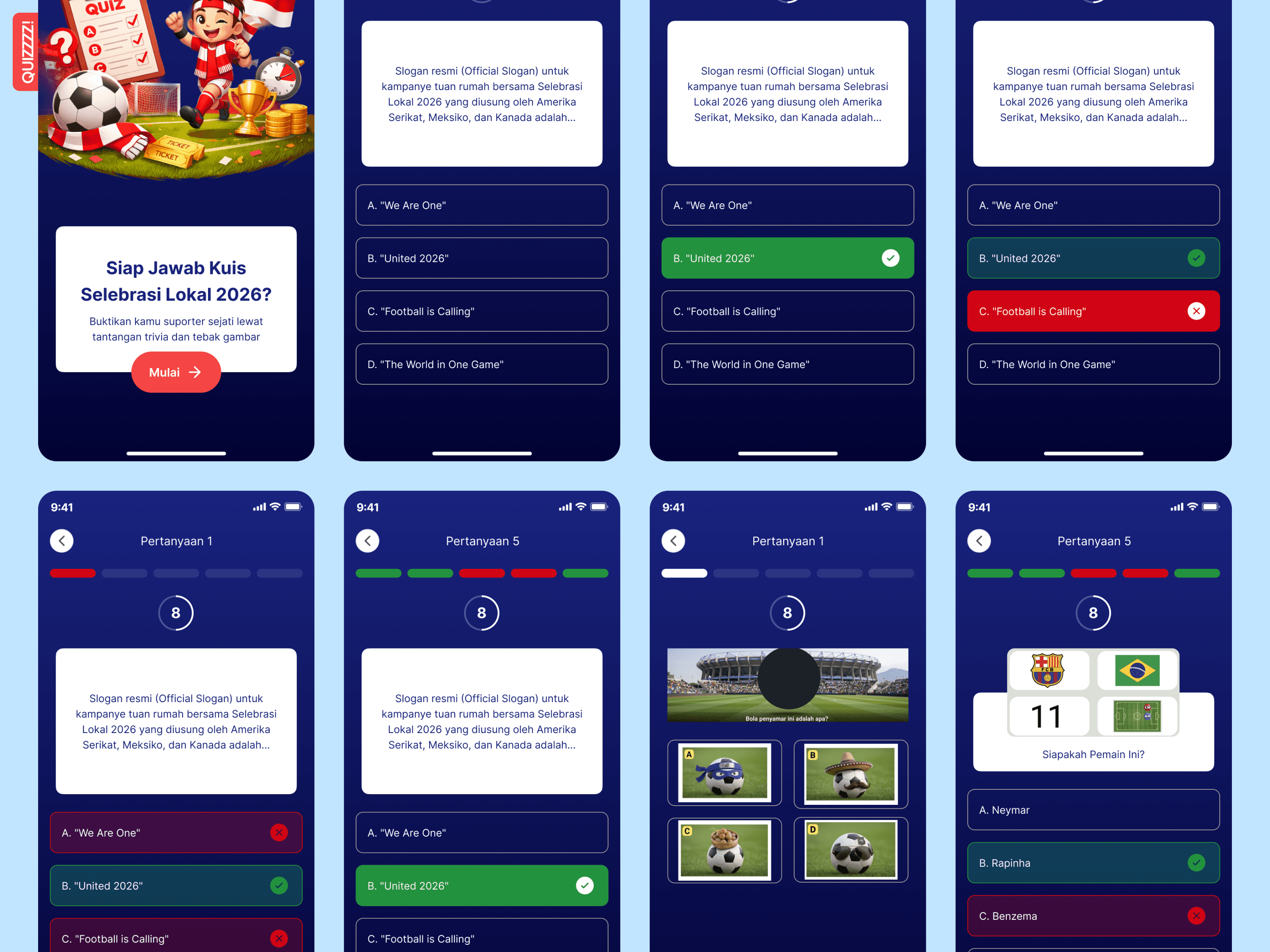
My fellow designer formulated the trivia concept. I owned the end-to-end UI and flow: from the banner click, to quiz onboarding, to the interactions, to connecting reward redemption with the TribunX points balance, so it feels as fast as tapping in on public transport.
For data, I designed the Player Stats UI as horizontal scrollable cards. The data stays comprehensive for hardcore fans, but the visuals stay digestible, so casual viewers never feel like they've opened a spreadsheet.
Because this was a temporary feature, I built the landing page from the Atomic Design components of the existing TribunX UI Kit. That cut engineering effort by around 40%.
Chapter V
Testing and iteration
Great products come from iteration. In usability testing of the first quiz prototype, we found a massive drop-off among Gen Z respondents.
My blind spot was a format full of rigid blocks of tactical text, which felt like a school exam.
I pivoted. The quiz became Visual Knowledge Cards: an iconic moment, a player silhouette, or a country flag, and the user has to guess it. Casual and Gen Z audiences process visuals much faster than text, and after the iteration the quiz completion rate climbed sharply.
Chapter VI
Discover your schedule
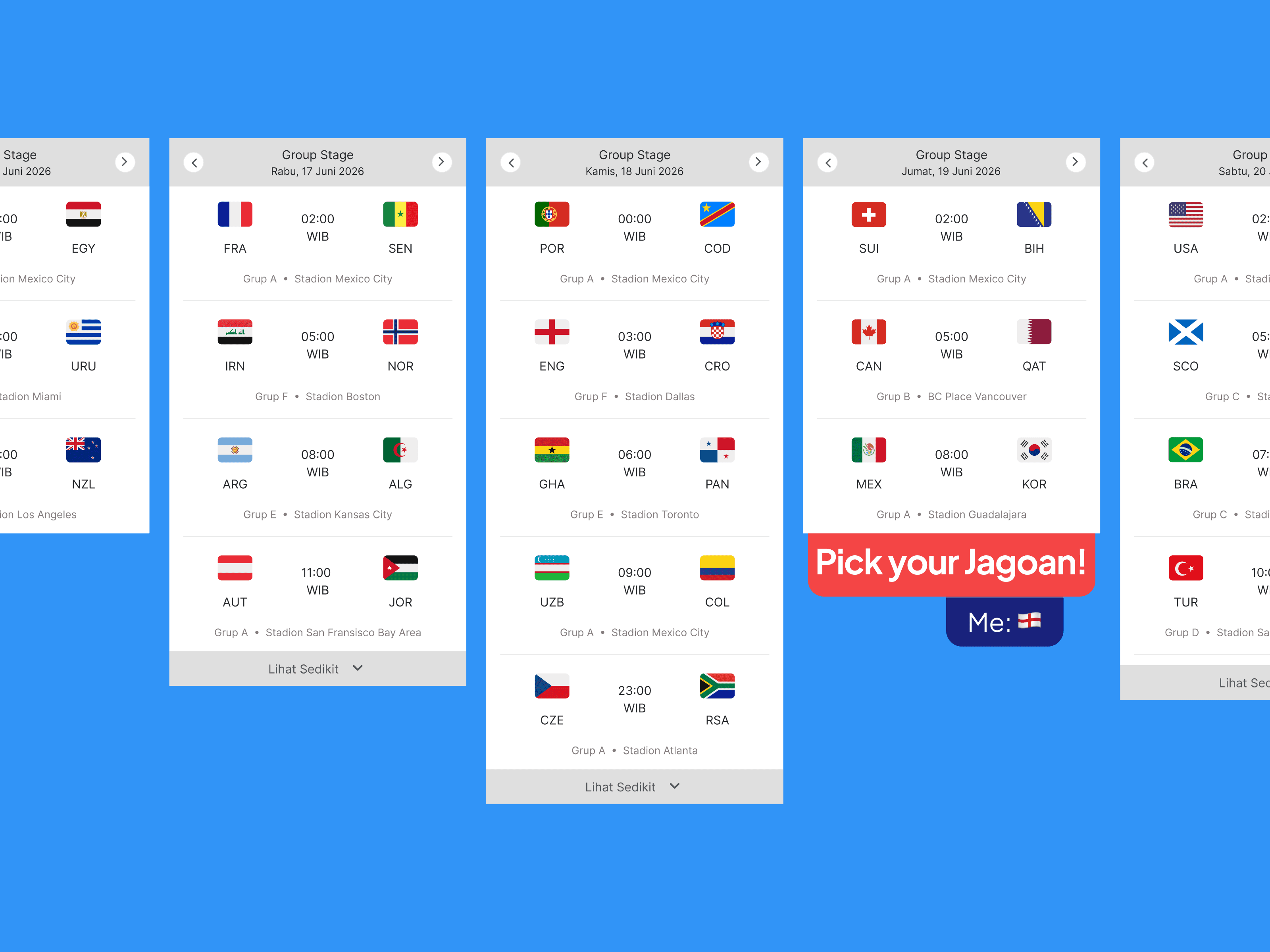
Without streaming, upcoming match schedules became a vital navigation asset. The main acquisition strategy was a contextual portal trigger that leads to the Selebrasi Lokal 2026 landing page.
While someone is deep in an article, a Selebrasi Lokal banner sits naturally between the paragraphs. Copy that invites a knowledge test, like "Test your football knowledge here", breaks reading fatigue and sends high-intent traffic straight to the landing page.
Chapter VII
Outcome and impact
The legal limits on streaming and naming weren't the end of the idea. They were a creative filter. Success was measured through a tight analytics funnel, across the six weeks from June 8 to July 19, 2026.
Active users
Launch week, June 8 to 14
New users
Launch week, from the contextual trigger
Active users retained
Week six versus week one
Views per active user
4.86 to 5.15, every single week
Views
Across the six weeks
Weekly total users
Reach: 808K to 894K every week
Reach is not engagement
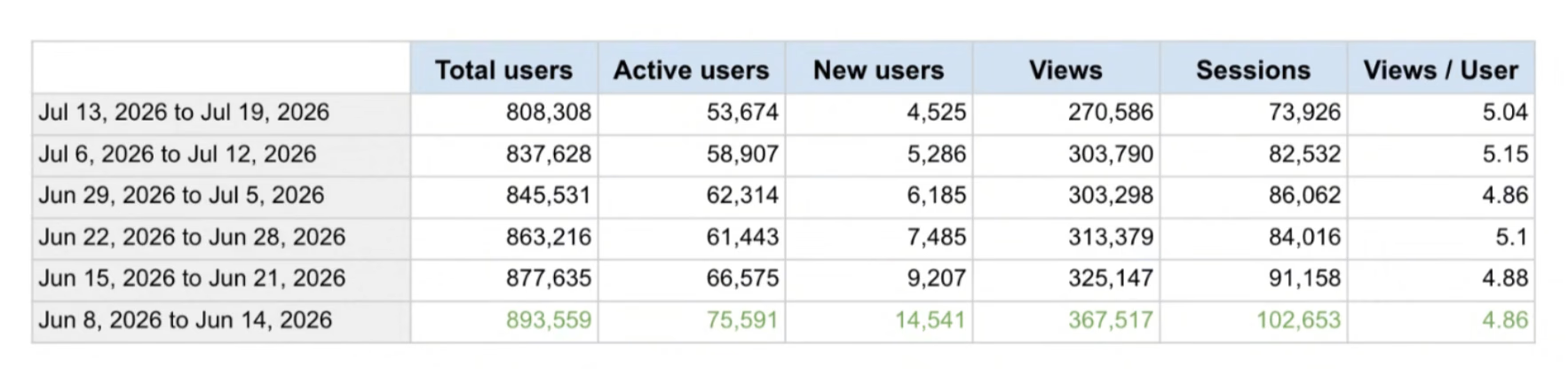
The landing page carried 808K to 894K total users every week. That's reach, and I treat it as the top of the funnel. The number I care about is engagement: 54K to 76K active users a week, each viewing about five pages.
A retention loop, not a launch spike
By week six, weekly active users were still at 71% of the launch week, and views per active user stayed between 4.9 and 5.2 even as match frequency dropped in the knockout rounds. New users peaked at 14.5K in the launch week and eased to 4.5K, which is what you'd expect once the first FOMO wave passes. Across the six weeks, the hub brought in 47.2K new users.
The quiz and the second-screen strategy created a habit, not a spike. The quiz UX drove high-quality engagement, not vanity traffic.
The trigger
The contextual portal trigger in Superskor articles caught the biggest wave of FOMO at the start of the tournament. With no aggressive push notifications, an organic trigger inside the article converted passive readers into 14.5K new users.
Built to scale
The Pop-Up Store architecture was built to scale. Through the tournament, the landing page carried 808K to 894K total users every week with a frictionless experience, which shows how robust the UI component system was.